Casper Cloaking Film vs. Frosted Privacy Film: Which One Actually Solves Screen Peeking
Glass-walled conference rooms and open offices define the modern Jeffersonville workplace. They also create a real visual hacking problem when meeting content or dashboards face a corridor or lobby. The question facility teams ask in 47130 is simple and practical: does frosted privacy film fix screen peeking, or does it just cover the glass and kill the open-office look that tenants fought to keep? In Class A space across River Ridge Commerce Center and Gateway Office Park, the answer is clear. When the goal is to hide digital content but keep the glass transparent, cloaking window film is the specification that actually addresses the threat. Frosted privacy film remains the right choice for other use cases, but it is not the screen privacy solution.
Why screen peeking is a Jeffersonville problem that frosted film does not solve
Jeffersonville’s commercial core grew fast around the River Ridge Commerce Center and the Ohio River corridor. The result is a high concentration of glass-fronted rooms in Class A and flex office that sit near public circulation paths. Walk the NoCo Arts and Cultural District, Downtown Jeffersonville, or the Veterans Parkway corridor in Clarksville and you see it through the glass. Boards, sales decks, patient scheduling screens, and KPI dashboards sit at eye level to anyone passing by. A frosted band or full frost will block the view, but it also blocks face-to-face visibility and daylight that the tenant wanted when the space was designed. People lose sightlines. Rooms feel closed. Managers ask for the glass to be cleared again, and the cycle repeats.
Screen peeking is not a generic privacy issue. It is a data exposure issue. The risk profile is different for a finance firm on Court Avenue in Downtown Jeffersonville, a logistics tenant at 300 Corporate Drive in Gateway Office Park, or a medical practice near Interstate 65 Exit 1. Staff need to see who is at the door. Leadership wants guests to observe activity without reading what is on the screens. This is the gap that cloaking window film fills, and it is why it shows up on Jeffersonville specs more each quarter.
How cloaking window film actually works
Casper cloaking technology filters the specific light characteristics that LED displays emit, while leaving the rest of the visible spectrum largely intact. The glass looks like glass. People, furniture, whiteboards, and architecture remain clearly visible through the partition. But the LED screen sitting inside the room appears as a uniform black rectangle to anyone outside looking through the glass.
From an optical standpoint, the film uses a selective filtering layer that targets the emission profile of mainstream LED backlit displays. The intent is not to tint the glass or obscure objects. The intent is to null the digital signal that allows an outside viewer to decode on-screen content. In practice, that means the room stays bright, open, and collaborative. People can wave a guest into the room, read body language, and keep the light quality that was part of the original design intent. The display inside the room remains perfectly readable to the occupants.
Designtex Casper Cloaking Film installs on the interior surface of the glass using a pressure-sensitive adhesive and a scratch-resistant hardcoat. The film’s visible light transmission sits cloaking window film Jeffersonville, Casper cloaking technology IN, River Ridge office privacy film, screen blackout window film near the mid-range typical of clear privacy laminates, often near 50 percent VLT in catalog specifications, which keeps the glass optically clean to passing traffic. Installation occurs on clean, dry glass with squeegee-grade mounting fluid to achieve an even, distortion-free bond. The glass substrate can be tempered, laminated, or annealed interior partition glazing. Low-iron clear glass, common in premium Jeffersonville Class A interiors, presents no issue. The film does not require power, sensors, or controls. It runs passively, always on, with no maintenance cycle beyond normal glass cleaning.
Casper cloaking film versus frosted privacy film in real rooms
Frosted privacy film blocks the view by diffusing light. It is a great way to obscure sensitive storage rooms, create a decorative band, or satisfy branding intent with a gradient pattern. It is not a screen privacy tool. If the screen sits behind a frosted band, the content is also hidden. That solves screen peeking, but at the cost of view-through, eye contact, and open-office quality. If the frost is installed above the sightline to keep the room open, the screen remains visible through the clear portion and the visual hacking risk remains.
Casper cloaking film is purpose-built for the screen problem. The content blacks out to the outside viewer while faces and gestures remain visible through the glass. In conference rooms along corridor runs at Gateway Office Park, this gives executives the control they want over sensitive presentations without covering the room in white frost. In boardrooms in Water Tower Square, it keeps the glass walls active for collaboration while meeting visitor expectations during client audits. In healthcare suites along 10th Street and Spring Street, it functions as a physical safeguard for displayed PHI while reception maintains line of sight.
Compatibility matters: the 40-inch minimum threshold and why Sun Tint tests every display
Not every display behaves the same. Jeffersonville offices often mix display types and sizes within the same suite. Designtex Casper Cloaking Film is most reliable on common LED backlit monitors and TVs at 40 inches and larger. Many 55-inch conference room displays cloak cleanly. Some smaller desk monitors and certain specialty displays can present partial cloaking or visible artifacts. Curved, high refresh gaming-grade displays and atypical OLED panels may vary. This is why a site-specific screen verification is mandatory before a project proceeds.
Sun Tint follows a simple, repeatable testing protocol during the walkthrough. The technician applies a letter-sized or larger hand sample of Casper to the conference room glass. The team opens standard content on the in-room display at full brightness and again at a normal work setting. Observers step into the corridor and confirm on-screen content appears fully black through the sample area while the rest of the room remains clear. The technician repeats the check on every unique display type present. Any display that does not cloak fully is documented. The spec then either repositions that display, pairs it with a localized frosted element, or keeps it in a zone where visual access is permitted. Projects across Jeffersonville that follow this protocol prevent surprises on go-live day.
Why the 40-inch threshold matters locally: River Ridge Commerce Center tenants tend to standardize conference rooms with 55-inch to 86-inch LED displays, which cloak reliably. Smaller huddle rooms with 32-inch monitors sometimes sit below the recommended threshold. The test catches this early, and the design team can adjust without slowing a tenant improvement schedule.
A shareable local data point Jeffersonville property pros care about
River Ridge Commerce Center spans about 6,000 acres and reached roughly 20 million square feet of developed buildings by January 2026, with 80-plus companies and an annual economic impact near $3.04 billion. That volume of glass-walled space is the reason “open-office security” became a line item across Southern Indiana. Casper cloaking film installs have tracked that growth. In the Jeffersonville and Louisville metro market in 2026, full-scope Casper projects have priced in the range of 25 to 45 dollars per square foot installed. A typical glass-front conference room runs 3,000 to 8,000 dollars depending on glass size, not including optional decorative layers. This cost benchmark tends to surprise teams that had budgeted for switchable glass. Cloaking comes in a fraction of that, without wiring, controls, or a learning curve for staff.
Compliance frameworks that point to cloaking film
Compliance teams do not write specs for aesthetics. They write to close real risks. Three frameworks drive many Jeffersonville decisions on screen privacy for glass rooms.
HIPAA Security Rule reasonable safeguards at 45 CFR 164.308 ask healthcare providers and business associates to manage exposure to displayed PHI. It is common for Jeffersonville medical offices and imaging suites in 47130 to face reception areas toward corridors and waiting rooms with full glass along the front. A frost band would reduce staff visibility and change the patient experience in the lobby. Cloaking film functions as a physical safeguard focused on the monitor exposure while preserving the open feel that patient design teams want. It becomes a win for operations and compliance at the same time.
SOC 2 visual access controls push tech and financial service tenants to reduce casual visual access to sensitive dashboards and client data in glass rooms. River Ridge tenants with logistics command centers and Downtown Louisville firms in 40202 often sit in cross-functional glass suites. Cloaking film checks the visual control box without forcing a redesign. PCI DSS visual security expectations for cardholder data environments play a similar role for bank branches and processing offices along Veterans Parkway and in St. Matthews.
Local building and fire egress codes also stay happier when the glass remains largely clear. Emergency responders get better sightlines. Occupants keep visual cues. Cloaking film aligns with those safety interests in a way that a large frost block does not.
Where each film excels across Jeffersonville properties
It is not a binary choice across an entire floor. The right solution depends on the room, the display, and the adjacency. Many projects combine both approaches for different zones within the same suite. In practice, the pattern looks like this.
- Use cloaking film on glass-walled conference rooms, executive offices, and huddle rooms where the main risk is on-screen content viewed from a corridor or lobby. Use frosted or gradient film for private office fronts requiring modesty at seated height, storage rooms, wellness rooms, and back-of-house zones where full obscuration is the goal. Use a narrow frosted band with Casper above or below it when furniture or sightline control is needed in addition to screen privacy. Use branded glass graphics at entries and reception to support wayfinding while leaving Casper to manage the screen privacy inside adjacent rooms. Reserve switchable glass for specialty cases where instant full privacy across the entire pane is mission critical and budget supports power and controls.
Product lines and hybrid specifications that work in Southern Indiana offices
Casper Cloaking Film from Designtex is the screen privacy backbone. It installs as a clean, full-height panel on clear interior glass with split seams placed at mullions or stiles. For suites that want a design element, a decorative overlay layer can be added. Many Jeffersonville tenants pair Casper with a narrow 3M Fasara band or a gradient to control distraction at desk height while keeping the rest of the pane optically clear. That overlay installs on top of Casper in defined zones and reads like etched glass from the corridor.
For projects that require both screen privacy and solar comfort at the perimeter curtain wall, 3M Prestige Series or 3M Ceramic IR on the exterior glazing can reduce solar heat gain and glare while Casper manages the interior glass partitions. Those films lower Solar Heat Gain Coefficient while keeping high visible light transmission, which fits ASHRAE 90.1 envelope goals in Class A buildings. The two film types live on different glass surfaces and serve different functions. They do not conflict in an interior partition application.
Casper integrates cleanly with common partition systems in River Ridge and Downtown Jeffersonville. Clear anodized or black-framed storefronts accept full-height panels. Frameless tempered butt-joint walls accept tight butt seams that align with the silicone joint. Doors receive Casper as well, with hardware cutouts performed on site. Standard polyester film substrates, scratch-resistant hardcoats, and pressure-sensitive adhesives are the material platform shared across this specification family.
Installation depth that preserves the design intent
On a Gateway Office Park conference room, the crew will map seams to stiles, verify glass type, and protect flooring and furniture. Interior glass is cleaned, decontaminated at edges, and wet installed with low-VOC mounting fluid. Casper is squeegeed to a distortion-free finish. Edge trims align to gasket lines or leave a micro-reveal depending on the partition spec. Doors are handled last so traffic can continue through the space. Most rooms return to service the same day, with a short cure period before heavy cleaning resumes. The film requires no special ongoing maintenance beyond non-abrasive cleaners and soft cloths.
For healthcare facilities, Sun Tint coordinates staging to avoid patient hours and follows infection control risk assessment practices appropriate to the zone. For law firm build-outs in Old Jeffersonville, installers adjust to historic glass quirks and building access constraints. For logistics tenants with shift operations at River Ridge, crews schedule overnight or early morning windows. The goal is to deliver screen privacy with minimal disruption.
Edge cases, trade-offs, and honest guidance
OLED and certain specialty panels may not cloak as reliably as common LED backlit displays. The site test will surface this. If a wall-size direct-view LED or a tiled display behaves differently, the spec may shift to change the orientation of the display, add a light decorative diffuser band in a controlled zone, or use an alternate approach. If a huddle room relies on a 27-inch desktop monitor, frosted film may be the practical choice because the monitor could sit below the recommended threshold. If a tenant wants zero visual connection into a room, a full frost or gradient may be the right fit. Cloaking is not a fix for whiteboard content. If whiteboard privacy is needed from the corridor, a decorative solution or a roller shade becomes part of the package.
Angles matter. Cloaking is designed to block content when the viewer stands in front of the glass. Very oblique viewing angles through adjacent panes or sidelites can reveal fringe artifacts if a display sits tight to the glass. On projects in Find more info North Shore Office Park and AP Business Park with complex glass corners, the design review places displays back from the glass or adjusts furniture to keep the shadow zone intact. That fine-tuning is part of the walkthrough, not a surprise at the end.
What frosted privacy film does well in Jeffersonville offices
Frost is still essential. The Veterans Parkway corridor has many clinics where modesty and privacy at seated height are the priority. A frosted lower band solves that without blocking the nursing station sightline above. Storage areas, mother’s rooms, and wellness spaces want full articulation privacy. Frost delivers that with a clean etched-glass look. Branded gradients or Fasara patterns create identity in Downtown Jeffersonville reception zones and storefronts along Spring Street. These elements layer well with Casper on adjacent rooms. The result is a cohesive plan that keeps glass active where it should be and private where it must be.
Performance context in a mixed-humid climate
Jeffersonville sits in ASHRAE Climate Zone 4A. That mixed-humid profile drives both cooling and heating seasons. Casper is an interior partition solution, so it does not carry the energy performance conversation the way a perimeter solar control film does. Still, teams often ask about glare. If a conference room faces west over the Ohio River or the Big Four Bridge, glare onto displays may be as much of an issue as corridor viewing. The right pairing is a glare reduction solar control film on the exterior glazing such as 3M Night Vision 25 or a spectrally selective option like 3M Prestige 50. Those films target Total Solar Energy Rejected and Glare Reduction Percentage on the curtain wall while Casper handles screen privacy on the interior glass. That split keeps the design intent intact and addresses the actual drivers of occupant comfort.
Local building archetypes and how the spec adapts
Class AA office at Gateway Office Park with floor-to-ceiling partitions wants full-height Casper on all glass fronts to conference and executive rooms, with narrow Fasara banding in workstations to control distraction. Distribution and tech tenants at 400 River Ridge Parkway with glass-front huddle rooms ask for Casper on those rooms only, plus a simple frost on storage. Professional services along Quartermaster Station and Water Tower Square often combine Casper at client-facing rooms with a logo frost at entry sidelites. Healthcare in the 47130 zip code uses Casper on reception and consultation rooms, a privacy band for operatories, and clear glass where patient experience calls for openness. The range is wide, but the screen privacy problem shows up in the same places across Clark County and Floyd County.
Specification details that reduce risk
Casper installs on clean interior surfaces. The film presents a uniform optical field. Seams align to vertical mullions where possible. On frameless glass, seams locate tight and read as a hairline to the corridor. Most installs specify full height so that any display in the room is cloaked regardless of future furniture shifts. For rooms with sidelites or transoms, film coverage extends across all panels that provide a sightline to the display. This prevents an outside corner from creating an unintended viewing cone. Labels on doors and life safety decals remain visible through Casper because text and symbols are not an LED emission. That is one of the subtle advantages over dense frost in egress routes.
Compliance documentation is part of the closeout packet for regulated environments. For healthcare, the packet references HIPAA Security Rule reasonable safeguards and describes the display exposure the film mitigates. For SOC 2 and PCI DSS clients, the documentation frames cloaking as a visual access control over digital content from uncontrolled corridors. Manufacturer data sheets, warranty terms, and cleaning instructions round out the packet.
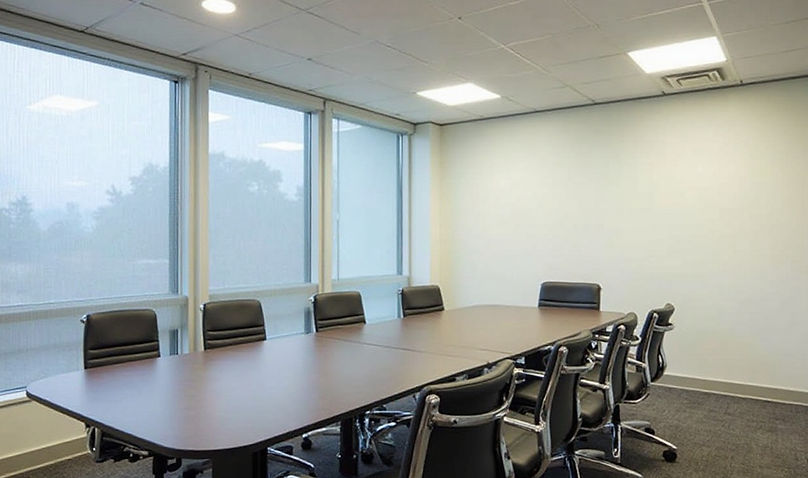
What cloaking window film Jeffersonville IN projects actually cost
Budgets in Southern Indiana in 2026 have settled into clear ranges. Cloaking film projects run about 25 to 45 dollars per square foot installed for standard interior glass partitions. Conference rooms with typical dimensions land between 3,000 and 8,000 dollars. Larger boardrooms or multi-room executive suites across Downtown Louisville in 40202 and 40203 can span 8,000 to 25,000 dollars and up depending on glass area and decorative overlays. Frosted or 3M Fasara overlays add incremental cost based on pattern density and coverage. Compared to switchable glass or full glass replacement, cloaking is a low-complexity retrofit that keeps build-out schedules on track at River Ridge and across the Jeffersonville Town Center corridor.
Pricing clarity helps procurement plan ahead. During the initial walkthrough, the team measures glass, tests displays, and provides a line-item scope with pane counts and any decorative pairings. That keeps tenant improvement contractors, architects, and facilities on the same page through submittals and approvals.
Why the installer credential stack matters in this category
Casper cloaking technology is distributed through Designtex and its authorized partner network. Access to product, training, and updates runs through that channel. Sun Tint operates as an Authorized Casper Cloaking Film Installer through Designtex and Decorative Films LLC and as a 3M Authorized Dealer and 3M Prestige Certified Installer. That stack matters in Jeffersonville because many projects are hybrids that pair Casper with 3M Fasara or a 3M solar control film, and facility managers want a single accountable contractor. It also matters for warranty administration and for consistent optical results across large glass runs in Class A space.
Factory-trained installers with commercial project management experience reduce disruption in buildings with high tenant density. Crews familiar with Jeffersonville properties know access routes, loading conditions at River Ridge, and the timing constraints in Downtown Jeffersonville along Spring Street and the NoCo district. That local familiarity speeds work and reduces friction with building operations.
A few Jeffersonville examples that show the decision path
A financial advisory firm near Walnut Ridge with a glass-front boardroom faced a corridor used by visiting clients. Frost would have blocked the glow and the body language that the partners value for rapport. Casper cloaked the 75-inch LED display while keeping the view, and a narrow 3M Fasara band at seated height softened distraction for the team across the hall.
A logistics tenant off River Ridge Parkway ran a 3-by-3 tiled dashboard wall in a war room close to a main corridor. After the site test, two older panels showed partial artifacts. The spec shifted to standardize the wall with a consistent LED model known to cloak well, and the team added a slim gradient band at the outside corner to tighten a viewing cone. The result met SOC 2 expectations and passed an on-site client audit week one.
A dental clinic off Veterans Parkway needed HIPAA-reasonable safeguards at reception and in a consultation room. Casper on the glass front allowed staff to maintain eye contact with patients while the scheduling screens and imaging previews blacked out from the lobby. Operatories kept a lower frosted band for modesty, and the practice avoided blinds that would have changed the bright, open feel the design team wanted.
Frequently weighed technical points
Cleaning is simple. Standard non-ammoniated glass cleaners and soft cloths are fine after the cure period. The film’s scratch-resistant hardcoat handles daily use. Safety glazing standards for the glass do not change after film install, but many safety and security films do carry ANSI Z97.1 and CPSC 16 CFR 1201 classifications. If a Jeffersonville project also needs forced-entry resistance at a storefront, 3M Safety and Security Window Film lives on the exterior glass and does not intersect with Casper on interior partitions. For LEED v4.1 Indoor Environmental Quality and WELL Building Standard intents around glare and daylight, pairing Casper with a spectrally selective perimeter film provides the data points that matter to the review team.
On warranty, Casper and 3M films carry manufacturer-backed terms. Commercial lifespans often run 10 to 15 years for interior films depending on exposure and care. The local installers log batch numbers and keep records on file for warranty service. This is important for multi-floor build-outs in Downtown Louisville zip codes like 40202 and 40206 where phased work occurs over several quarters.
Why Jeffersonville commercial properties are adopting cloaking faster than frost for screen privacy
Tenants want the sensation of openness that high-investment glass interiors provide. They also handle more sensitive on-screen data than ever. Cloaking window film gives both outcomes in the same room. It keeps the screen black to outsiders and the glass clear to everyone. Frost has a strong role for modesty and distraction control, but it trades away the open-office intent. That trade is hard to accept in Class A space at River Ridge and across the Ohio River in the Louisville medical and legal district. The growth curve in Jeffersonville reflects that reality.
What to expect during a site walkthrough in 47130
The walkthrough covers measurements, glass type, and the screen verification protocol. The installer samples Casper at each unique display and confirms black-out from the corridor. The team notes any outliers and proposes practical fixes. Locations like Quartermaster Station and Jeffersonville Industrial Park often have mixed glass systems across phases. The installer documents each zone so the construction manager does not need to guess during bid leveling. Schedules are set around tenant move-ins, with hours that avoid peak corridor traffic. A typical conference room installs in hours, not days. Multi-room suites finish in one to three days depending on scope.
Summarizing the choice in plain terms
- If the primary risk is people seeing what is on the screen through the glass, specify Casper cloaking film. If the need is to block views into a room for modesty or storage, specify frosted or gradient privacy film. If both outcomes are needed, combine Casper with selective decorative elements. Always test the exact displays on site before finalizing the spec. For perimeter heat and glare, handle that on the exterior glazing with a solar control film and keep Casper for the interior partitions.
Service and credential signals for decision-makers ready to move
Sun Tint serves Jeffersonville, Clark County, Floyd County, and the broader Louisville metro from 2209 Dutch Ln, Jeffersonville, IN 47130. Appointments run seven days a week from 7:00 AM to 8:00 PM to match tenant schedules. The team operates as a 3M Authorized Dealer and 3M Prestige Certified Installer and as an Authorized Casper Cloaking Film Installer through Designtex and Decorative Films LLC distribution. The installers are factory trained, the company is a licensed Indiana contractor with general liability insurance, and warranty support is handled locally. Commercial site walkthroughs include on-glass Casper samples and display verification. Call +1-812-590-1147 or visit https://www.sun-tint.com/cloaking-window-film-jeffersonville to book a Jeffersonville or Louisville metro consultation in zip codes including 47130, 47129, 47150, 40202, 40207, and surrounding areas.
For projects at River Ridge Commerce Center, Gateway Office Park, Water Tower Square, Veterans Parkway retail corridors, and Downtown Jeffersonville, Sun Tint aligns Casper cloaking film with 3M decorative and solar lines as needed. That single-source approach reduces change orders, speeds approvals, and delivers the clear glass look that tenants want with the screen privacy the compliance team requires. If the search was for cloaking window film Jeffersonville IN, this is the pathway from problem to installed solution.
Sun Tint
2209 Dutch Ln
Jeffersonville,
IN
47130
Phone: (812) 590-1147
Official Website: sun-tint.com/jeffersonville-in